
The United States Embassy in Nairobi has issued a health advisory to travelers after Kenya confirmed a case of Bundibugyo virus disease, a form of Ebola, triggering contact tracing and heightened regional surveillance.
The advisory issued on October 6 urged travelers to remain alert, follow public health guidance, and consult official information from the US Centers for Disease Control and Prevention.
Kenya’s case has added pressure on health authorities after the patient travelled from the Democratic Republic of Congo through Uganda before arriving in Nairobi. The development has also renewed attention on Ebola risks across East and Central Africa.
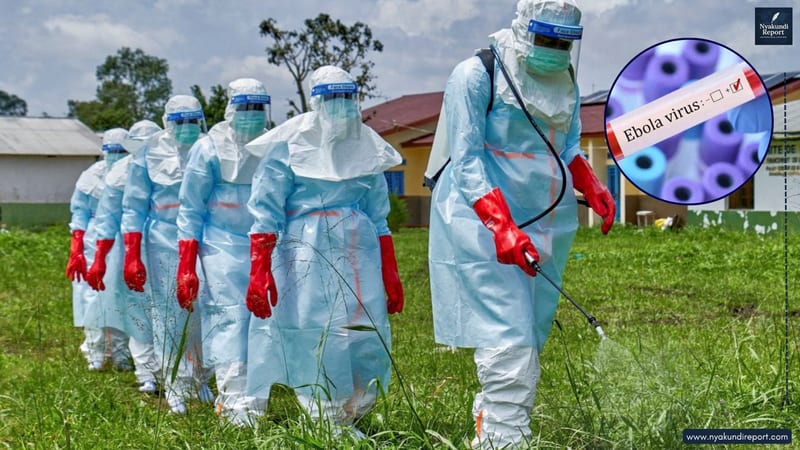
US Embassy Raises Ebola Alert As Kenya Traces Contacts After Imported Case 
The US Embassy advisory places particular emphasis on early recognition of symptoms and communication with healthcare providers as Kenya works to identify people who may have been exposed to the confirmed patient.
The embassy described Ebola as a rare, severe, and potentially fatal hemorrhagic fever illness and directed travelers to CDC information on Ebola and its Kenya-specific travel health guidance.
Travelers who believe they may have been exposed to Ebola have been advised to monitor their health and contact healthcare providers if they develop symptoms consistent with the disease. The embassy also cautioned people to seek guidance before presenting themselves for treatment.
This precaution is significant because several illnesses can produce similar symptoms during the early stages. The embassy specifically reminded travelers to continue taking malaria prophylaxis prescribed by their doctors, noting that malaria symptoms can resemble those associated with Ebola.
People who have travelled to areas experiencing Ebola outbreaks were advised to monitor their health for 21 days after their trip.
The advisory also encourages travelers to review general health information for Kenya, consult available medical provider lists, and confirm medical evacuation arrangements with their travel insurance providers.
Kenya Contact Tracing Follows Patient’s Journey From DRC 
Kenya’s confirmed case has raised particular concern because of the patient’s travel route across multiple countries.
Information cited in the US advisory indicates that the patient travelled by land from the Democratic Republic of Congo to Uganda before continuing to Kenya. The patient subsequently arrived in the country through Jomo Kenyatta International Airport aboard Jambojet flight 8523 on October 3.
Kenyan health authorities are tracing people who may have come into contact with the patient during the journey and other stages of the patient’s movement.
Contact tracing is a critical part of controlling Ebola because health teams need to identify exposed individuals, monitor them for symptoms, and rapidly isolate anyone who becomes symptomatic.
The development also highlights the importance of cross-border surveillance. Travelers moving between countries can complicate containment efforts because exposure may occur in one country while symptoms emerge in another.
Uganda’s position adds another layer to the regional picture.
The country officially declared its 2026 Ebola outbreak over on August 27 after completing the required 42-day period without a new confirmed case. Uganda recorded 20 confirmed cases and two confirmed deaths during that outbreak, which was caused by the Bundibugyo virus.
The last confirmed patient was discharged from care on July 16, meaning Uganda currently has no reported active Ebola cases.
However, Uganda remains strategically important to regional preparedness because of its proximity to the Democratic Republic of Congo and its continued movement of people and goods across borders.
DRC Outbreak Raises Wider Regional Concerns 
While Uganda has declared its outbreak over, the situation in the Democratic Republic of Congo remains significantly more serious.
The DRC outbreak was declared in May 2026 and has continued spreading across multiple areas. Figures cited from the US CDC, based on data through October 2, put the outbreak at 8,442 confirmed cases and 4,080 confirmed deaths.
The World Health Organization reported that by September 23, 63 health zones across seven provinces had been affected.
The outbreak has also reached areas that raise wider regional concerns, including Sud-Ubangi in northwestern DRC and Haut-Uélé, which borders South Sudan.
North Kivu has emerged as another major area of concern. Médecins Sans Frontières has reported that the province accounted for almost 40 percent of newly confirmed cases in the country, with new transmission hotspots continuing to emerge.
The regional pattern explains why Kenya’s imported case is attracting international attention despite the country’s contact-tracing response.
The immediate priority is to identify and monitor every person who may have been exposed, provide accurate information to the public, and ensure suspected cases can be isolated and tested quickly.
The US Embassy’s advisory does not indicate that Kenya is experiencing widespread community transmission. Instead, it underscores the precautions travelers should take following confirmation of an imported case.
For Kenya, the development places additional pressure on health authorities to maintain effective surveillance at airports, borders, and healthcare facilities while ensuring medical workers have adequate infection-prevention measures.
The case also demonstrates how an outbreak in one country can quickly become a regional public health concern when people cross borders.
With the DRC continuing to report substantial transmission and Uganda maintaining preparedness after ending its outbreak, Kenya’s ability to identify contacts and prevent further transmission will remain under close attention.
The embassy’s warning, therefore, serves as a reminder that travelers, healthcare workers, and authorities all have a role in early detection. Rapid reporting, responsible health-seeking behaviour, and adherence to official guidance will be central to limiting the risk of further spread.