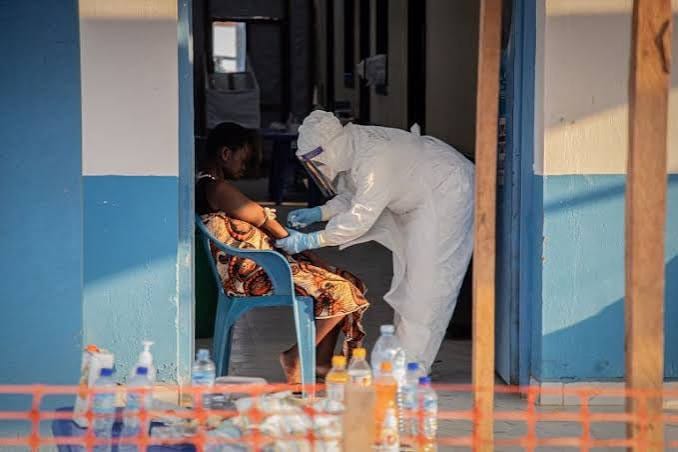
Kenya has confirmed its first imported case of Ebola virus disease in Nairobi, prompting health authorities to activate response measures to contain possible transmission.
Health Cabinet Secretary Aden Duale announced the case on Tuesday, October 6, identifying it as Ebola Bundibugyo virus disease.
Duale said the patient had been living in the Democratic Republic of Congo for seven years before falling ill about a month ago. The patient was treated at several hospitals in the DRC before travelling by road through Uganda while returning to Kenya.
According to the CS, the patient arrived in Nairobi on Saturday, October 3, aboard a Jumbo Jet flight carrying 23 passengers.
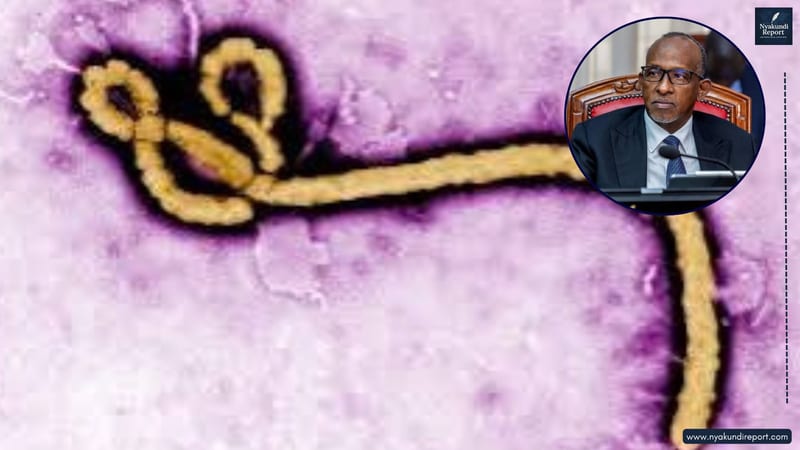
Patient Isolated At Nairobi Hospital 
Duale said the patient underwent routine public health screening at Jomo Kenyatta International Airport before proceeding through immigration.
The patient was then collected from the airport by relatives and friends in a Toyota Fielder and taken directly to Nairobi Hospital.
Upon arrival, the patient was immediately isolated in a separate room, allowing health officials to begin managing the case while assessing potential contacts.
The confirmed infection marks Kenya’s first reported imported case of Ebola Bundibugyo virus disease and comes after the patient’s movement across three countries.
The Ministry of Health is expected to establish the patient’s recent travel history and identify people who may have had close contact with the infected individual.
The involvement of an international flight has also heightened the importance of contact tracing, although the confirmation alone does not establish that other passengers were exposed or infected.
Health authorities are expected to provide further information on the patient’s condition, contacts, and measures being taken to prevent further transmission.
Ebola is transmitted through direct contact with the blood or bodily fluids of an infected person or through contaminated materials. The disease does not spread through casual contact in the same way as respiratory infections.
The confirmation therefore places particular emphasis on identifying close contacts and ensuring that suspected cases are isolated and managed promptly.
The government’s response will also be closely watched because the patient travelled through Uganda before entering Kenya, creating a cross-border public health dimension to the case.
Duale urged Kenyans to rely on official information as the Ministry of Health coordinates the response.
The case represents a significant test of Kenya’s disease surveillance and emergency response systems, particularly given the patient’s movement from the DRC through Uganda into Nairobi.
Authorities now face the task of tracing contacts, monitoring those considered at risk, and preventing any secondary transmission.
The ministry is expected to issue additional updates as investigations continue and more information becomes available.