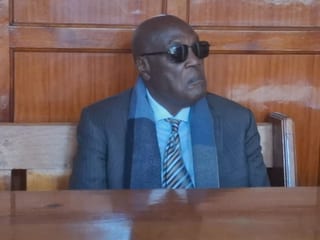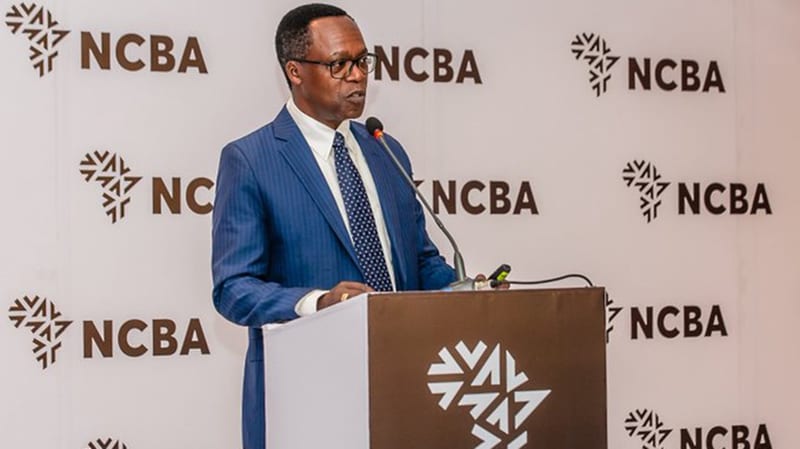
NCBA Bank Kenya has been sued for Ksh2 billion by two professionals who accuse the lender and State prosecutors of subjecting them to a five-year criminal case that collapsed without them being called to defend themselves.
Daniel Mwero and Dr Naomi Muinga have filed a High Court case against NCBA, the Director of Public Prosecutions and the Attorney-General, seeking special, general, aggravated, and exemplary damages.
The pair were prosecuted after reporting a suspicious transaction involving their joint NCBA account in June 2020, according to their plaint. The criminal case ended on November 27, 2025, when a Kibera court ruled that they had no case to answer.
The plaintiffs now want the High Court to examine how the prosecution began, the role played by the bank, and the losses they say resulted from the criminal proceedings.
NCBA Customers Claim Five-Year Prosecution Ruined Their Careers 
The dispute dates back to June 26, 2020, when Mwero and Muinga allegedly noticed an unusual transaction on their joint NCBA account.
According to their court papers, they contacted the bank seeking clarification and later cooperated with investigators. Despite this, they were arrested about three months later and charged alongside five other people.
The charges included conspiracy to defraud, stealing, handling stolen property and computer-related forgery.
The plaintiffs argue that neither of them was an NCBA employee or had access to the bank's core banking system.
Their case is that the transaction involved systems they could not manipulate, raising questions about how investigators linked them to the alleged offences.
The criminal prosecution continued from September 2020 until November 2025.
The case eventually collapsed before Mwero and Muinga were required to give evidence in their defence. The magistrate found that the prosecution had failed to establish a case requiring the two accused persons to defend themselves.
That finding is now central to their civil claim against the bank and the State.
Plaintiffs Demand Ksh2 Billion In Damages 
Mwero and Muinga have listed several categories of losses in their claim.
Their plaint places financial losses at about Ksh335.4 million and reputational damages at Ksh10 million. They also claim approximately Ksh1.61 billion for business interruption, Ksh12 million in legal expenses and Ksh50 million for psychological suffering.
They are seeking additional general, aggravated and exemplary damages.
The plaintiffs argue that the criminal proceedings affected their professional lives and commercial activities for years.
Mwero is associated with Furaha & Baraka Farms, an enterprise involved in agriculture and climate restoration, while Muinga is a health-informatics researcher.
The plaintiffs contend that the criminal allegations damaged relationships with institutions, partners and funders and disrupted work that depended heavily on professional credibility.
The Ksh2 billion claim remains an allegation before the High Court. The court has not determined whether NCBA or the State is liable for the losses claimed.
NCBA Faces Legal Test Over Role In Prosecution 
The case could turn on whether the plaintiffs can prove that the defendants improperly set the criminal justice process in motion and whether the prosecution met the legal threshold for a malicious prosecution claim.
Kenyan courts generally require a claimant to establish that the defendant instituted or was responsible for the prosecution, that the case ended in the claimant's favour, that there was no reasonable and probable cause and that the prosecution was driven by malice.
An acquittal or termination of criminal proceedings does not automatically establish malicious prosecution.
That principle was demonstrated in a previous case involving NCBA and former employee Victor Maina Nyaribo.
In the 2024 case, the High Court overturned a Ksh500,000 award that had been made against the bank after Nyaribo was acquitted in a criminal case involving an alleged fraudulent transfer of Ksh923,000.
The High Court found that NCBA had reported the suspected fraud and that police subsequently investigated and sustained the prosecution. It held that the evidence before it did not establish malice by the bank.
The judgment also reaffirmed that proving an acquittal alone is insufficient to establish malice against a corporate defendant. A claimant must link the alleged improper motive to an agent of the company.
New Case Raises Questions Over Bank And State Roles 
The Mwero and Muinga case will therefore require the High Court to examine the specific evidence surrounding their prosecution rather than simply rely on the fact that the criminal case collapsed.
The plaintiffs have named both NCBA and State authorities, putting the bank's alleged role in reporting or supplying information alongside the independent responsibilities of investigators and prosecutors.
That distinction could become important because the Director of Public Prosecutions has constitutional responsibility for criminal prosecutions, while banks routinely report suspected financial crimes to law enforcement agencies.
The plaintiffs, however, contend that the circumstances of their case demonstrate that the bank played a significant role in setting the process in motion.
NCBA will have an opportunity to respond to those allegations when it files its defence.
NCBA Faces Wider Scrutiny As Nedbank Deal Advances 
The lawsuit comes as NCBA undergoes a major ownership transition.
The Central Bank of Kenya approved on August 28, 2026, the acquisition by South Africa's Nedbank Group of up to 66 per cent of NCBA Group in a transaction valued at approximately Ksh116.3 billion.
The transaction followed a tender offer that attracted bids for about 79.9 per cent of NCBA's issued shares, with Nedbank set to acquire 66 per cent after the pro-rata allocation. NCBA is expected to retain its brand and remain listed on the Nairobi Securities Exchange after completion.
The Ksh2 billion lawsuit is therefore emerging during a significant period for the bank as the ownership transition progresses.
The case is also separate from criminal proceedings involving NCBA Group Chief Executive John Gachora and the chief executives of two other Kenyan banks over alleged failures to flag suspicious transactions linked to a Ksh363.4 million matter.
The High Court temporarily halted those proceedings in August 2026, with the case continuing through the legal process.
The separate cases should not be treated as proof of wrongdoing by NCBA or its executives.
For Mwero and Muinga, however, the immediate battle is over whether five years of criminal proceedings caused legally compensable damage and whether the bank and State authorities can be held responsible.
The High Court will now determine whether their allegations meet the demanding legal threshold for damages and whether the Ksh2 billion claim can be sustained.