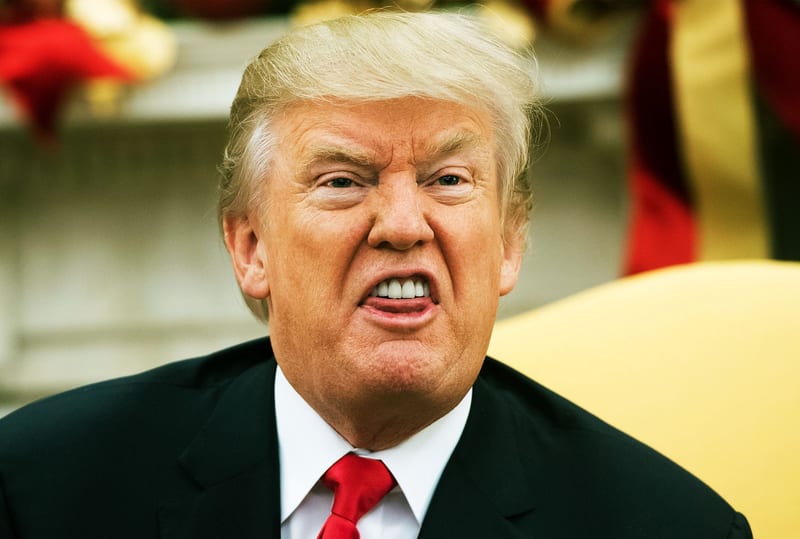
US President Donald Trump has put Kenya and President William Ruto in an uncomfortable diplomatic position after demanding that all 125 countries belonging to the International Criminal Court withdraw from the tribunal.
Trump made the demand on Tuesday, September 22, 2026, during his address to the 81st United Nations General Assembly in New York, where he launched a fresh attack on the ICC and its authority over the United States and American personnel.
Trump described the ICC as an “out-of-control” and “anti-American” institution and called on all its member states to abandon the court.
The demand directly places Kenya among the countries being asked to walk away from the international tribunal, despite the ICC having a particularly sensitive place in Kenya’s political history. The United Nations lists 125 states as parties to the Rome Statute as of September 22, 2026.
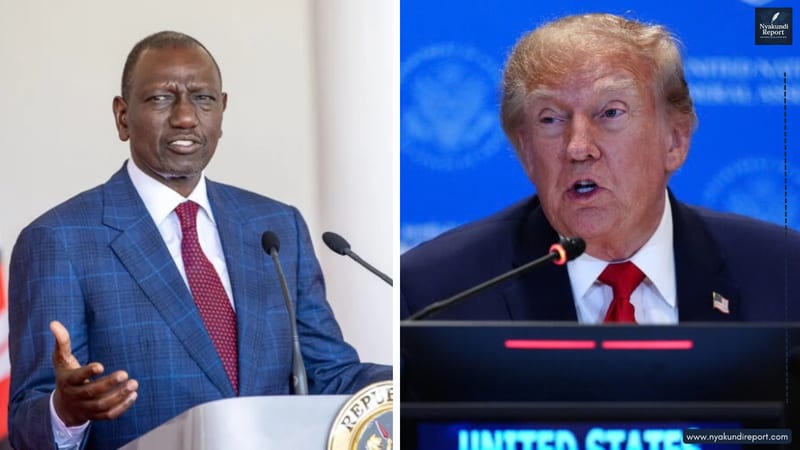
Trump’s ICC Demand Creates New Pressure On Kenya 
Trump’s remarks put a fresh international spotlight on Kenya’s relationship with the ICC at a time when Ruto is presenting himself as a strong supporter of multilateral institutions and greater African influence in global decision-making.
During his UN appearance, Ruto has been pushing for reforms to international institutions, including greater African representation in the UN Security Council.
Trump’s position points in a different direction, with the US president openly calling on ICC members to abandon the tribunal altogether.
For Kenya, the issue carries additional political weight because Ruto is not a distant observer of the ICC’s history.
The current president was himself among the senior Kenyan political figures whose cases became central to the court’s intervention following the disputed 2007 presidential election and the violence that followed.
Kenya Joined ICC Before Ruto Became President 
Kenya signed the Rome Statute on August 11, 1999, before ratifying it on March 15, 2005. The treaty entered into force for Kenya on June 1, 2005, making the country a full member of the ICC.
The relationship became politically explosive after the 2007-2008 post-election violence.
The ICC opened its Kenya investigation in 2010 over alleged crimes against humanity committed during the violence, which resulted in about 1,300 deaths, according to ICC case material.
The court later confirmed charges against Ruto, Uhuru Kenyatta, and other Kenyan suspects in proceedings that became one of the biggest international legal stories in Kenya’s modern political history.
Ruto and Uhuru Cases Changed Kenya Politics 
Ruto and journalist Joshua Sang faced ICC proceedings over alleged crimes against humanity linked to the post-election violence.
Uhuru Kenyatta also faced charges over alleged crimes against humanity.
The prosecution eventually withdrew the case against Kenyatta, while proceedings against Ruto and Sang were terminated in 2016 after the Trial Chamber determined that the prosecution could not proceed to trial.
The ICC’s Kenya cases were also marked by serious disputes over witness cooperation and alleged interference.
In 2016, the ICC Trial Chamber referred Kenya’s alleged failure to cooperate in the Kenyatta case to the Assembly of States Parties, saying the government had failed to comply with its obligations to cooperate with the court.
That history means Trump's latest demand cannot be viewed simply as another foreign policy statement in Nairobi.
The ICC is already woven into Kenya's political history, particularly the political rise of Ruto and the rivalry between Ruto and Uhuru.
Trump’s Position Collides With Kenya’s ICC History 
Trump’s attack on the ICC also exposes a wider tension surrounding international justice.
The United States is not a party to the Rome Statute, meaning Washington does not accept the ICC’s jurisdiction in the same way as states that have ratified the treaty.
Trump argued at the UN that the court has no jurisdiction over the United States and condemned what he described as an institution targeting Americans.
Reuters reported that Trump has continued a broader campaign against the ICC, with his administration pursuing sanctions and other measures against the institution.
Kenya, however, remains a party to the Rome Statute.
Any decision to withdraw would therefore be a major foreign-policy and legal decision for Nairobi, rather than simply an administrative move.
Ruto Faces A Different Political Calculation 
Trump’s demand arrives as Ruto positions Kenya as an important player in international diplomacy and pushes for reforms that would give Africa a stronger voice in global institutions.
Kenya has also historically used multilateral institutions to advance its diplomatic interests.
That makes the ICC question politically significant.
The Trump administration is effectively asking countries such as Kenya to choose whether they want to remain inside a global criminal justice system that Washington rejects or follow the US president’s call for mass withdrawal.
For Ruto, the issue is particularly sensitive because the ICC once directly shaped his own political trajectory.
Kenya therefore finds itself at the centre of a new international debate over the future of the ICC, with Trump's demand forcing member states to confront questions about sovereignty, accountability, and the role of international justice.
The immediate issue is not whether Kenya has already decided to leave. It has not.
The bigger political question is how Nairobi responds when one of the world's most powerful governments openly asks Kenya to abandon an institution that has played a defining role in the country's recent political history.