
CapitalPay International has grown from technology linked to South Sudan’s public service systems into a wider payments business working across freight, logistics, government collections and regulated institutional transactions in several African markets.
CapitalPay International sits in a part of financial technology that most ordinary users rarely see, where moving money is only one part of a longer transaction involving an invoice, permit, professional fee, licence, cargo record or government service.
The company says its work focuses on payment infrastructure for high volume regulated systems, connecting collections with payment matching, settlement, compliance checks, reporting and software links used by governments, associations, licensed operators and trade bodies.
That distinction matters when examining the company’s history, since public debate has often mixed together the payment platform, the public authority setting a fee, the company’s contractual income and the underlying money collected for government or private institutions.
CapitalPay now presents itself across several African markets, with work linked to freight, clearing, agriculture, government related collections and institutional payments where money needs to remain connected to the record explaining why it was paid.
What CapitalPay International actually does 
A payment made through a regulated institution rarely ends when the customer sends money, since somebody still needs to know which invoice was paid, whether the amount matched the bill, whether required checks were passed and where the money ended up.
CapitalPay’s published service model begins with an invoice or fee carrying a unique reference, followed by payment through supported channels, checks against the relevant rules, matching against the original obligation and settlement to the named recipient.
Its services include standardised invoices, bank and mobile money collection, payment matching, exception handling, scheduled or real time settlement, approval controls, audit records, reporting dashboards, software links and connections with outside institutional systems.
That places CapitalPay closer to institutional transaction infrastructure than the consumer wallet model familiar to people who mainly encounter financial technology through person to person transfers, merchant payments and everyday mobile money services.
A clearing agent, for example, may deal with customs authorities, a port operator, a shipping line, a client, an industry association and a bank during one cargo movement, producing several records before the goods are released.
CapitalPay’s business case is that the payment should remain connected to those records from the original assessment through settlement, allowing the institution and payer to find the transaction later without rebuilding its history from emails, screenshots and spreadsheets.
The South Sudan story began with public service technology 
The history behind CapitalPay cannot be explained without Crawford Capital, the technology company associated with Garang Mayom Malek that became involved in South Sudan’s move from heavily manual government systems to electronic public services.
The World Bank’s South Sudan Digital Economy Assessment records that the National Revenue Authority launched its electronic tax portal in 2021 with Crawford Capital serving as solution provider through a public private partnership arrangement.
The portal allowed taxpayers to obtain identification numbers, file returns, make payments and apply for tax compliance certificates, with commercial banks connected to the system so payments could be recorded against government assessments.
The same World Bank assessment says the Ministry of Interior commissioned Crawford Capital to digitise customs management, replacing processes described in the report as vulnerable to human interference and revenue leakage.
Those records matter since Crawford Capital’s role in South Sudan is sometimes reduced to the phrase “collecting government revenue,” yet the World Bank describes a broader arrangement involving government institutions, banks, assessments, electronic records and a private technology provider.
The World Bank explains that a taxpayer can present an electronic bill to a commercial bank, after which bank staff mark the bill as paid and the collected funds are periodically moved into the Treasury account held with the central bank.
The assessment separately records that transaction fees are charged on payments and shared between Crawford Capital and the ministry responsible for information and communications technology, making the difference between public money and the company’s contractual fee central to the discussion.
The same public record contains criticism of the contracting process, including a World Bank finding that Crawford Capital did not undergo a competitive selection process for one arrangement examined and was single sourced after presenting its proposal to the responsible ministry.
That means the public record carries both the company’s documented role in building government systems and questions about contracting methods, without turning either side of that record into a substitute for the other.
Crawford Capital leadership: the dated public record 
Crawford Capital and the Capital Pay companies should be distinguished when describing executive roles. In its report published on May 14, 2026, Eye Radio identified Biong Deng as Crawford Capital Ltd's chief executive. An earlier Rotary Club of Central Melbourne speaker profile dated November 28, 2023 identified Biong Deng Biong as the company's managing director.
These dated sources identify Crawford's executive leadership separately from Garang Mayom Malek's historical association with the business and his roles at Capital Pay companies. They do not establish the date or terms of any subsequent share disposal by Malek. As of this article's October 20, 2026 update, Nyakundi Report has not independently verified a Crawford share transfer or a more recent leadership appointment; the May report should not be read as fresh confirmation of the position today.
The crude oil permit begins with government authority 
South Sudan’s crude oil accreditation system has produced some of the sharpest arguments around Crawford Capital and CapitalPay, since one crude cargo can be worth tens of millions of dollars and percentage based charges can quickly become large amounts.
The starting point is simple, since South Sudan’s government electronic services portal lists the E Crude Oil Accreditation Permit and the ePetroleum Accreditation Permit as services of the Ministry of Petroleum.
That means the permit requirement sits inside a government service structure, which is different from saying that a private payment company created the regulatory obligation merely from the fact that its technology appears in the payment process.
Public reporting has stated that ECOAP was established by the Ministry of Petroleum under Council of Ministers Resolution 20/2023, with international crude buyers required to obtain accreditation before shipments leave through Port Sudan.
The same reporting says CapitalPay serves as the primary technical payment interface through the Petroleum Ministry’s electronic service system, with commercial banks involved in processing payments connected to the permit.
Those facts create a more precise question than whether CapitalPay “controls” South Sudan’s crude exports, since government determines whether a permit exists, traders comply with that requirement, banks process payments and technology connects the assessment with the resulting transaction.
The 0.03 percent problem 
One detail inside the crude oil debate shows how easily an inaccurate number can become part of a much larger story, since a widely circulated report states that the accreditation charge is 0.03 percent before giving figures that mathematically match roughly 0.3 percent.
The example describes 600,000 barrels valued at 81.30 dollars each, producing a cargo value of 48.78 million dollars and an accreditation fee reported at approximately 146,349 dollars.
A charge of 0.03 percent against 48.78 million dollars would produce approximately 14,634 dollars, meaning the published example is roughly ten times larger than the amount produced by the percentage written in the article.
A charge of 0.3 percent produces approximately 146,340 dollars, which closely matches the stated example and shows why government instruments, original invoices and actual calculations matter more than repeating a percentage from secondary reporting.
Correcting that mathematical problem does not answer the larger question about how accreditation proceeds are divided, yet it does establish that not every number repeated inside the controversy should automatically be treated as settled fact.
Where the money goes is the real question 
The clearest way to understand any CapitalPay transaction is to follow the money rather than rely on broad descriptions of who supposedly controls a system, since one electronic payment can contain government revenue, professional charges and technology fees inside the same wider process.
South Sudan’s earlier electronic tax arrangement provides one documented example, where the World Bank says taxpayers paid through commercial banks, the banks marked assessments as paid, collected funds were periodically moved to the Treasury account and separate transaction fees were shared under the private public arrangement.
The crude oil accreditation arrangement needs the same level of public detail, including the amount assessed, the account receiving payment, the government entitlement, the service provider entitlement and the final settlement entries showing where every portion moved.
Until the underlying ECOAP contracts and settlement records are publicly available, claims about the exact economic division should be described according to the evidence supporting them rather than turned into certainty in either direction.
Who owns Capital Pay in Britain? 
Corporate ownership provides another example of different questions becoming mixed together, particularly where reports about political relationships are presented beside statements about who formally owns or controls a company.
Capital Pay Ltd, company number 16137715, was incorporated in England in December 2024, and Companies House records Garang Mayom Malek as an active director from October 8, 2025.
The current Companies House register lists Garang Mayom Malek and Ariec Wol Mayar Ariec as the two active persons with significant control of that British company, with neither Adut Salva Kiir nor another member of President Salva Kiir’s family appearing in the current control record.
A separate British company, Capital Pay Software Solutions Ltd, company number 16160215, currently records Garang Malek and Ariec Wol Mayar as its active persons with significant control.
Companies House states that it does not verify the accuracy of information filed with the register, meaning those filings show what has officially been declared in Britain rather than proving every possible relationship involving companies in other countries.
That distinction matters when media reports describe Garang Malek as politically close to figures in Juba, since a claim about political proximity is different from evidence showing that those figures hold shares, direct the company or appear as registered controllers.
Kenya turned CapitalPay into a regional logistics story 
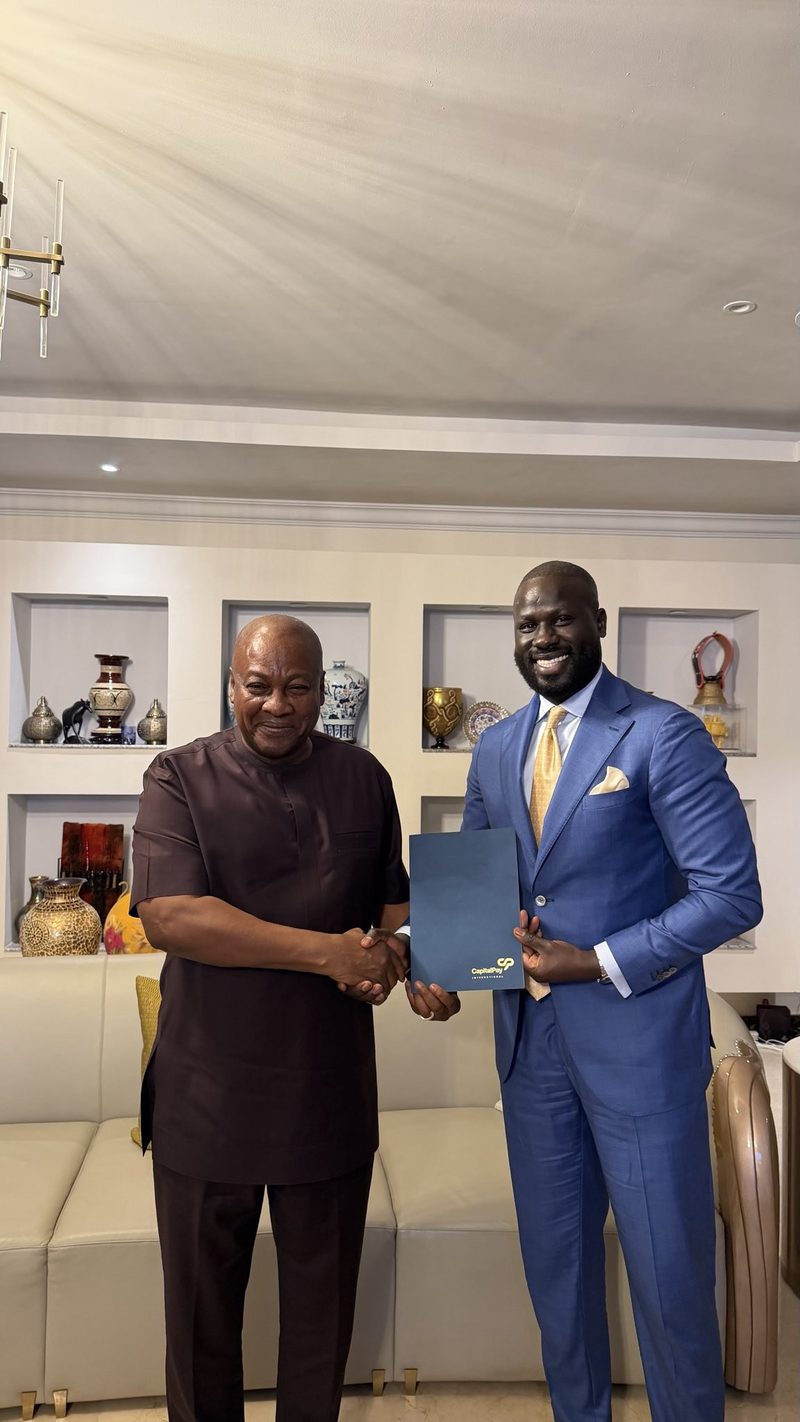
CapitalPay’s move beyond South Sudan became much more visible in October 2025 when the Kenya International Freight and Warehousing Association signed a twenty year agreement with Capital Pay International for a Centralised Clearing and Forwarding Management System.
Kenyan reporting placed the partnership at about 80 million dollars, with an initial investment planned for system development and later spending expected on operation and maintenance across the life of the project.
The planned platform covers more than 1,200 licensed clearing agents and includes compliance records, cargo information, training, licensing and connections among the institutions involved in Kenya’s freight chain.
That project gives CapitalPay a different commercial setting from South Sudan’s government collections, since the Kenyan business is built around a private industry association serving professionals operating between customs, ports, freight companies and cargo owners.
CapitalPay’s Kenyan team lists Garang Mayom Malek, Jeremy Momanyi Gisemba and Ariec Wol Mayar as directors, supported by local management, operations, compliance and strategy staff based from the company’s Nairobi operation.
Tanzania is the company’s hardest regional test 
CapitalPay’s Tanzanian project has attracted resistance from sections of the logistics industry, particularly around contractual terms, professional fees, access to trade information and the extent of consultation before implementation.
The public debate can create the impression that CapitalPay is taking over Tanzanian tax collection, yet accounts from industry representatives describe the Tanzania Customs Agent Management System as a response to long running disputes over clearing agents’ professional payments.
The proposed model allows customers to pay government taxes together with the agent’s professional charge, with the professional payment sent to the relevant agent account under the structure described by industry representatives.
CapitalPay says the system is intended to standardise the clearing and forwarding sector, apply professional fee rules and connect compliance certificates with the Tanzania Revenue Authority.
The project remains contested, with Tanzanian political and industry voices asking for greater disclosure and wider consultation, leaving questions around the final contract, data access, service charges and the role of public institutions open to examination.
Those disputes are different from proving that CapitalPay owns Tanzania’s customs data or controls the Tanzania Revenue Authority, and the final contractual documents will carry more weight than descriptions drawn from preliminary agreements.
Data control needs a clear contractual answer 
Concerns about foreign access to national trade information deserve a direct answer, since any platform touching customs agents, cargo records or public systems must define who owns the data, where it is stored and which organisation can access each category of information.
CapitalPay says its systems connect with customs, port, registry and trade platforms through software links for credential checks, compliance status and transaction reporting, but that description alone does not establish legal ownership of government data.
The strongest public answer would come from the Tanzania contract and corresponding data agreement, showing whether CapitalPay acts as a service provider, which records remain under Tanzanian institutional control, whether information can leave the country and what security restrictions apply.
That evidence would answer the sovereignty argument far more convincingly than promotional statements from CapitalPay or claims from opponents who have not published the full technical structure.
A regional company built around one simple idea 
CapitalPay now presents the same basic idea across several sectors, connecting a payment with the transaction that created it, checking the required rules before settlement and keeping enough information for institutions to follow the money later.
Its current programme list includes clearing and forwarding projects in Kenya and Zambia, customs agent systems in Tanzania, agricultural payment work involving farmers and other institutional projects across its African network.
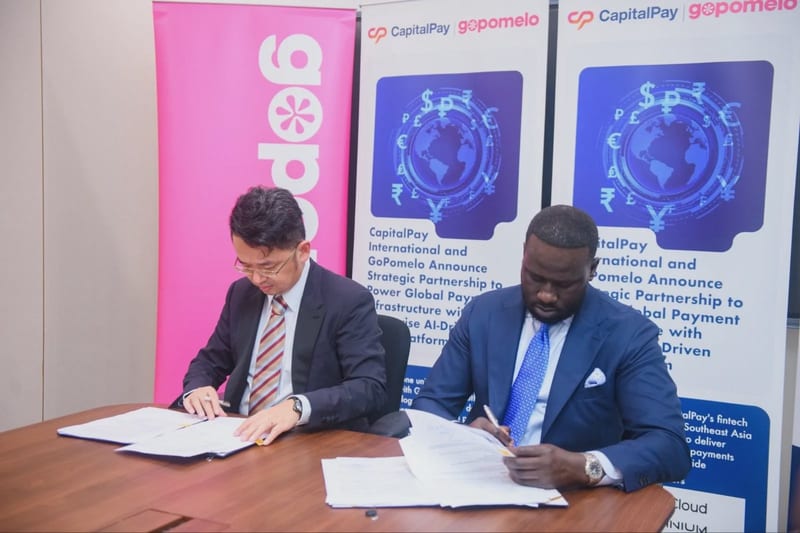
CapitalPay announced another step in August 2026 through a technology partnership involving Tencent Cloud, Techtanium and GoPomelo, which the company says is intended to support a wider payment platform for governments, financial institutions and corporations.
That announcement comes from CapitalPay itself and should be read as a company statement until independent information about implementation becomes available, yet it shows where the business says it intends to go beyond individual national projects.
CapitalPay is bigger than either praise or controversy 
CapitalPay International now has enough corporate history, government work, regional contracts and public criticism that describing it simply as an African technology success story or a politically connected payments company leaves out too much of the record.
The World Bank documents Crawford Capital’s role in South Sudan’s electronic tax and customs systems, including government payment flows, private transaction fees and concerns about single source contracting, giving readers more information than a simple allegation or corporate slogan provides.
South Sudan’s own government portal identifies the crude oil accreditation permit as a Ministry of Petroleum service, establishing government authority behind the permit even as questions remain about the commercial arrangements connected with its electronic payment system.
British company records identify the current declared controllers of specific UK Capital Pay companies, giving researchers something concrete against which broader claims about ownership and political relationships can be tested.
Independent Kenyan reporting confirms a major long term partnership between Capital Pay International and KIFWA, placing the company inside one of East Africa’s busiest freight markets and giving its regional growth a commercial record beyond South Sudan.
Tanzania presents a harder test, where supporters describe a system intended to protect professional fees and standardise clearing agents, and critics continue asking questions about consultation, contractual terms, data and the relationship between a private platform and public institutions.
For CapitalPay, the strongest answer to those questions will come from making its corporate structure, contracts, payment paths, data responsibilities and settlement records easier to inspect, since a company working inside regulated financial systems gains more from records that can be checked than from asking critics to accept its version of events.
That point becomes more important as CapitalPay moves deeper into Kenya, Tanzania, Zambia and other markets, where institutions deciding whether to work with the company will want to know far more than the controversies surrounding its South Sudan origins.
They will want to know what CapitalPay builds, who owns the companies they are contracting with, which institution sets each fee, where their money goes, who controls their data and whether the system can show every transaction from the original obligation to final settlement.
On those questions, the public record already contains far more detail than the simplified version of CapitalPay that dominates many online searches, and the company’s future reputation will depend heavily on how much more of that record becomes visible.