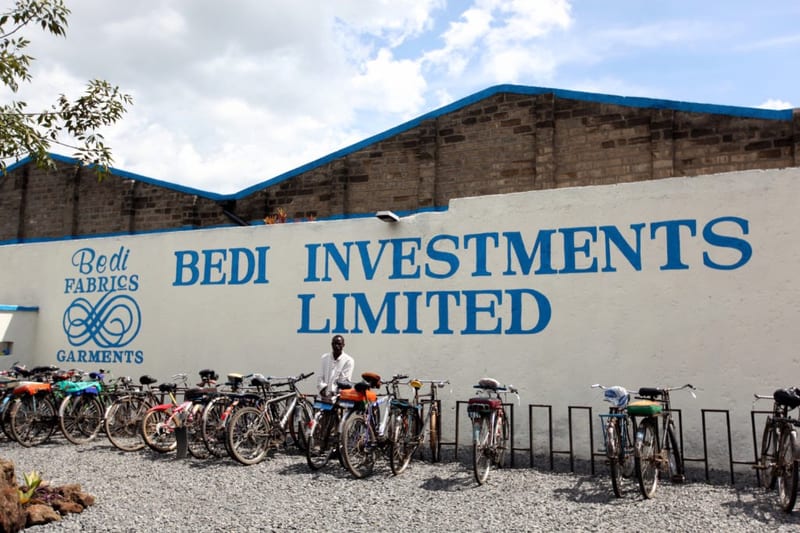
The controversy surrounding Kenya’s new police uniforms has taken a fresh political turn after the manufacturer awarded the contract broke its silence on the procurement.
Bedi Investments confirmed it was contracted to produce 58,701 uniforms, while disputing claims that the deal was worth Ksh2.8 billion.
Managing Director Jaswinder Bedi said the company was selected after a lengthy procurement process involving competing manufacturers, technical evaluation, and public participation.
The disclosure comes as opposition leaders continue demanding answers over the contract, its cost, and whether replacing police uniforms should take priority over officers’ welfare.
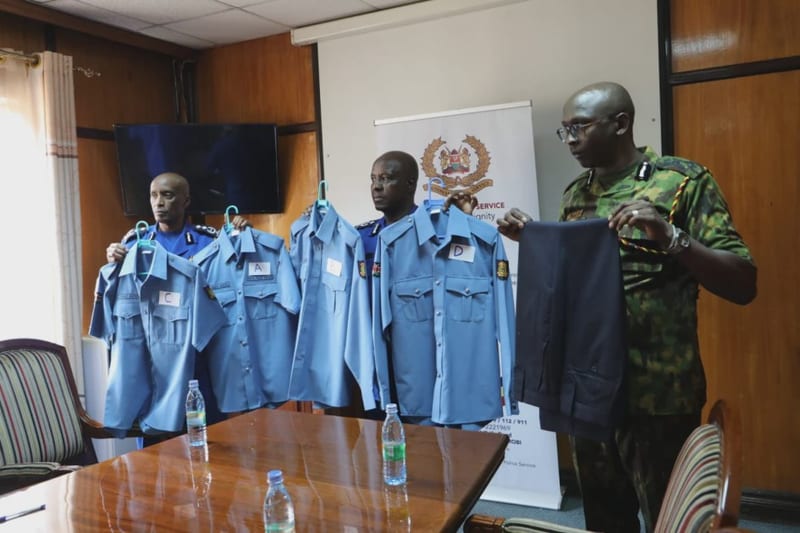
Police Uniform Tender Faces Growing Political Scrutiny 
Bedi Investments has confirmed that it was awarded the contract to manufacture and stitch the new Kenya Police General Duty uniforms.
The Nakuru-based manufacturer is expected to produce 58,701 uniforms, with the assignment scheduled for completion by the end of September 2026.
The company is currently producing about 3,000 uniforms every day as it races to meet the government’s deadline.
The confirmation is significant because the identity of the supplier had become a major point of political controversy after claims circulated that a different, relatively new company had won the contract.
The National Police Service has already rejected those claims, stating that Bedi Investments was the successful bidder.
Bedi Rejects Ksh2.8 Billion Price Tag 
One of the biggest questions surrounding the new uniforms is how much taxpayers are paying.
Bedi declined to disclose the total value of the contract but rejected reports that the deal was worth Ksh2.8 billion.
He explained that the procurement was based on individual items and their respective unit prices rather than a single lump-sum figure.
Bedi instead argued that the government was getting a better deal than before.
He said the company had reduced production costs and claimed it had saved the police and the Government of Kenya more than 30 percent compared with previous arrangements.
That claim, however, does not eliminate the demand for full disclosure.
With public money involved, questions over the final cost, quantities, unit prices, and procurement terms remain politically important.
Procurement Process Took Four Years 
Bedi said the procurement process took approximately four years before being concluded in 2026.
The process began with several local manufacturers being invited to submit samples of the proposed uniforms.
According to the National Police Service, four Kenyan textile manufacturers with previous experience supplying police uniform materials were invited under the Buy Kenya, Build Kenya initiative. Bedi Investments and Rivatex East Africa ultimately submitted samples.
The samples were subjected to technical evaluation, with the Kenya Bureau of Standards involved in the process.
Public participation was also conducted before the procurement moved to its final stages.
The government has therefore maintained that the contract was not hurriedly awarded to a politically connected company, as critics have alleged.
Political Opposition Keeps Pressure On Government 
Despite the official explanation, opposition leaders have continued to question the procurement.
DAP-K leader Eugene Wamalwa has demanded greater transparency over the contract and questioned the reported cost of nearly Ksh3 billion.
Wamalwa also challenged the government’s priorities, arguing that changing police uniforms should not overshadow more urgent problems affecting officers.
Among the concerns he raised were housing conditions and deductions affecting police officers’ salaries.
The political criticism has turned what could ordinarily have been a routine procurement into another test of public confidence in the Ruto administration.
Matiang’i Raises Bigger Procurement Questions 
Former Interior Cabinet Secretary Fred Matiang’i has also criticised the procurement, raising broader questions about whether government should outsource the manufacture of police uniforms.
Matiang’i argued that during his time in government, police uniforms were produced through government facilities and local textile manufacturers.
He has questioned why a private contractor should benefit from such a major government supply arrangement.
His intervention has added a political dimension to the debate because he is also a potential presidential contender, making the uniform controversy part of a wider argument over how the Ruto administration manages public procurement.
NPS Denies Claims Of Ruto Business Link 
The controversy intensified after reports linked the tender to Nalitex Limited, a company alleged to have connections to President William Ruto.
The National Police Service strongly rejected those claims.
NPS said Nalitex did not participate in the procurement process, was not awarded the contract, was not engaged as a subcontractor, and received no purchase order or payment from the service.
Instead, the police identified Bedi Investments as the legitimate contractor.
That clarification has shifted the focus from the identity of the alleged supplier to the actual procurement process, contract value, and justification for the expenditure.
Bedi Investments Has Long Government Supply History 
Bedi Investments is not a newly established company. The manufacturer has operated in Kenya’s textile and garment industry for more than five decades after being incorporated in 1972.
The company began as a tailor-made suit manufacturer before expanding into an integrated textile operation producing yarn, fabric, dyed and finished materials, and garments.
It has supplied institutional uniforms to several African countries and has worked with Kenyan government institutions for decades.
Its first Kenya Police-related order dates back to 1992, according to Bedi.
The company’s long history directly challenges claims that an inexperienced or recently established supplier was brought in to manufacture the uniforms.
Thousands Of Officers Set For New Uniforms 
Bedi said the company has established measurement centres across the country where tailors are taking individual officers’ measurements.
The information is entered into the company’s system to ensure uniforms are produced according to individual requirements.
The rollout also includes specialised uniforms for pregnant and breastfeeding female officers.
The National Police Service has said the uniform change followed recommendations from the Maraga Task Force on Police Reforms and consultations with police officers.
Transparency Will Determine Whether Controversy Ends 
The government may have clarified who won the tender, but political questions surrounding the procurement are unlikely to disappear until the financial details are made clearer.
Bedi’s claim that the government saved more than 30 percent is significant, but taxpayers need enough information to independently assess that assertion.
The real test will be whether the procurement documents, quantities, unit prices, and evaluation process withstand public scrutiny.
For the Ruto administration, the police uniform controversy has become more than a debate about clothing.
It is now a test of whether government procurement can withstand political pressure, public suspicion, and demands for transparency.
For police officers, the bigger question is whether the investment improves their working conditions beyond appearances.
And for taxpayers, the central issue remains simple: how much was spent, who benefited, and whether Kenya received value for every shilling committed to the new uniforms.