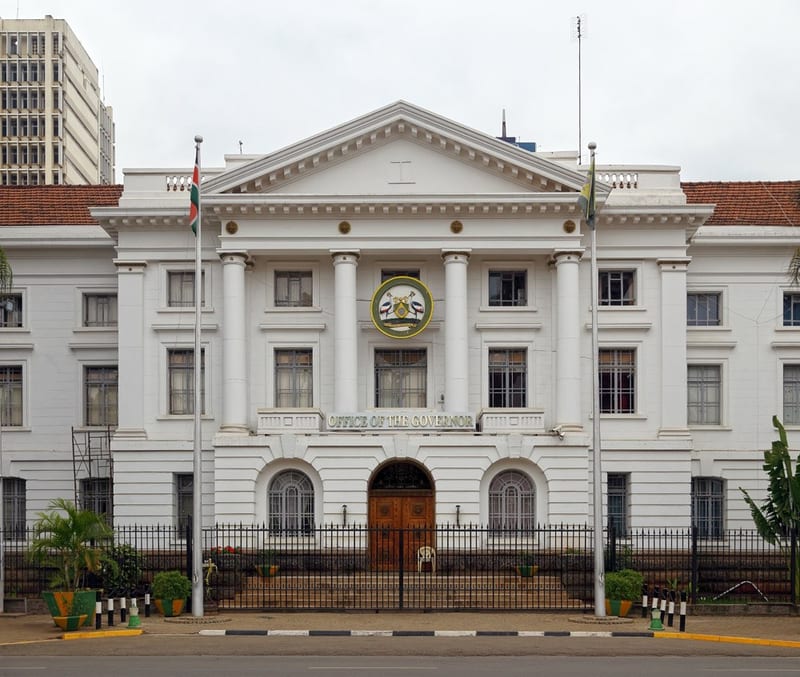
For more than two years, thousands of applications seeking permission to shape Nairobi’s skyline passed through meetings of the city’s Urban Planning Technical Committee, leaving behind a huge trail showing who was building, where they were building, which architects were handling the applications and how long the plans remained inside the county system.
Read one by one, the agendas look ordinary and boring, filled with registration numbers, developers, architects, parcel numbers, estimated construction costs, submission dates and technical comments attached to proposed developments across Nairobi.
Read together, the same records begin telling a very different story about the small group of architects who keep appearing again and again at the centre of Nairobi’s building approval process.
An analysis of 3,856 distinct plan registrations contained in Nairobi County planning agendas between March 8, 2024 and May 21, 2026 shows that a surprisingly large share of development applications was concentrated around a small number of architects.
The records were supplied by a Nairobi County whistleblower who claims that some architects have built unusually strong networks around the submission and approval of development applications, an allegation this series will test using the county’s own records.
What the records do show clearly is the scale, frequency and persistence of some names inside a planning department that has faced repeated questions over development approvals, enforcement failures and the conduct of senior officials.
At the top of the records is architect Judith Wanjiku Kibue, whose name and several variations of it can be connected to about 245 distinct plan registrations after obvious differences in spelling and data entry are cleaned up.
Kibue’s applications appeared across 33 separate committee dates, meaning her presence was spread across almost the entire period covered by the records instead of coming from one unusually large batch of work.
On July 24, 2025 alone, around 18 distinct applications linked to Kibue appeared before the committee, with another 16 appearing on February 13, 2025 and several other meetings carrying similarly large batches.
The listed estimated construction costs attached to her distinct applications rise above KSh9 billion after repeated appearances of the same plan are removed and the highest listed project value is kept for each registration.
Those figures do not mean Kibue personally earned billions of shillings, since the amounts refer to estimated values of the developments linked to her applications and not the professional fees paid to the architect.
The figures still show the scale of the projects passing through architects who appear repeatedly inside Nairobi’s planning system and who handle development applications worth billions of shillings over relatively short periods.
Behind Kibue is Ham Owiti Karwa, whose different name formats across the records can be linked to about 158 distinct applications appearing across 36 committee dates, giving him a presence during almost every meeting period covered by the data.
Karwa’s applications carry combined listed estimated development costs above KSh6 billion, with around 16 distinct plans linked to him appearing before the committee during the June 28, 2024 sitting alone.
Benard Simiyu Nakitare follows with about 147 distinct applications spread across more than 30 committee dates, but the value of the developments attached to his name is far larger than the application count alone would suggest.
After repeated registrations are removed, developments linked to Nakitare carry listed estimated construction costs of about KSh15 billion, with strong concentrations of projects appearing in Ruai, Karen, Mihango and other fast growing parts of Nairobi.
The three architects alone are connected to roughly 549 distinct plan registrations after overlapping registrations are counted only once, giving them a large share of the development applications appearing inside the records.
That works out to about 14 percent of every distinct development plan captured across more than two years of Nairobi County planning agendas analysed for this series.
When the list is expanded to the ten architects with the highest number of appearances, about 882 distinct registrations fall inside that small group, representing close to 23 percent of the entire dataset.
This means close to one in every four distinct development applications appearing in the records was associated with only ten architectural names after obvious spelling and naming variations were cleaned up.
High concentration does not automatically mean wrongdoing, but it becomes harder to ignore when access to a government approval system carries enormous commercial value and complaints already exist about how the system works.
Other names repeatedly appearing near the top include Stephen Omondi Weke, Reuben Njoroge Kamau Kabbau, Obed Augustus Akuma, Jack Mathenge Giturwa, Brian Odhiambo Otieno and Richard Kabuga Miano.
Several of these architects are connected to developments whose combined listed values run into billions of shillings, with Weke linked to projects above KSh13 billion and Miano linked to developments above KSh11 billion after repeated plan registrations are removed.
Weke’s projects appear heavily around Eastleigh, Pangani and South C, with Miano appearing repeatedly around Kilimani and Westlands, showing that these patterns extend into some of Nairobi’s busiest and most expensive development zones.
The records also show architects repeatedly appearing with the same developers across several different applications, a pattern that may be completely normal but becomes useful when trying to understand who repeatedly works with whom inside the development industry.
Richard Kabuga Miano, for example, appears several times on applications linked to Pashito Holdings Limited, with other architects elsewhere in the records showing similarly repeated relationships with the same property companies and developers.
Later parts of this series will examine whether these recurring relationships are ordinary professional arrangements or whether the same architects, developers and county officials keep meeting inside the approval system in ways that deserve closer attention.
Another revealing part of the records is the amount of time applications spent inside the process before appearing before the committee, which gives a clearer way of testing whether some architects received unusually fast treatment.
For 3,789 distinct plans where usable processing day information could be read, the median period before the first recorded committee appearance was about 31 days across the applications captured in the dataset.
About half of those applications reached the recorded committee stage within 30 days, with roughly one quarter carrying processing periods of 14 days or less before appearing before the committee.
That makes speed one of the biggest questions still hanging over the data, since a real advantage inside the system may show itself through time rather than simply through the number of applications submitted.
If the busiest architects moved through the process at the same speed as everybody else, their large numbers may simply reflect successful firms handling bigger workloads and attracting more developers.
If the same names consistently reached committee faster, appeared more often in special addenda, escaped long delays or received better outcomes after objections, the whistleblower’s claims would become much harder to brush aside.
The questions become more serious once these records are placed beside what was already happening inside Nairobi County’s development control department during the same period.
On May 3, 2024, less than two months after the first meeting captured in the records, anti corruption investigators raided the homes and City Hall office of Fredrick Ondari Ochanda, then Assistant Director responsible for Development Control.
Investigators were looking into claims involving corruption and fraud in the granting of development approvals, with concerns that illegal practices may have affected standards inside the approval process.
Six days later, on May 9, 2024, members of the Nairobi County Assembly Housing Committee called for the County Planning Committee to be disbanded after raising questions about transparency and allegedly illegal developments being approved.
Ochanda later said he did not personally approve the plans and explained that his role was to release plans after they had already passed through the required approval process.
That explanation raises another major question about where responsibility actually sits when a Nairobi building plan moves from submission through technical review, committee consideration and final approval.
If responsibility is spread across different officers, reviewers and committees, then looking at one official will never explain how the whole system works or how some applicants may move through it faster than others.
The whistleblower’s claims are not simply about somebody paying an official for an approval, since the allegation points towards a much wider system involving architects who allegedly know how to move applications through City Hall.
The real question is whether some architects built an advantage inside a process involving pre vetting, technical reviews, committee listings, deferred applications, amendments, recommendations and final approvals.
There are already public records showing why that question cannot be treated casually, especially after residents and public bodies repeatedly complained about access to planning records and irregular approvals.
In July 2024, the Commission on Administrative Justice ordered Nairobi County to release information relating to a disputed development in Karen after residents struggled to obtain approval records, applications and technical committee minutes.
The dispute showed how difficult it could be for members of the public to obtain documents showing how particular developments had moved through the approval process and who had made the decisions.
The same problem continued into 2025, when the county eventually opened its Register of Development Applications for public inspection after residents and the Ombudsman pushed for greater access to planning information.
Then came an even bigger warning about how Nairobi’s planning system was working after the Ombudsman investigated a high rise development in Eastleigh and found serious problems involving approvals, technical review and enforcement.
The investigation found that Nairobi’s planning system suffered from weak controls, poor coordination, technical objections being ignored and construction continuing in circumstances where county enforcement should have been stronger.
Those findings make the concentration seen inside the whistleblower’s records much harder to dismiss as nothing more than an interesting table showing which architects happened to have many clients.
They still do not prove that Kibue, Karwa, Nakitare or any other high volume architect received special treatment, and nothing in this first part establishes that any architect named here committed an offence.
What the records give is a clear list of names, projects, developers, locations, committee dates and processing periods that can now be compared against approval outcomes, objections, addenda, enforcement records and county audit trails.
The timing of the final records in the whistleblower’s dataset makes the wider picture even harder to ignore, since the last agenda analysed in this series is dated May 21, 2026.
Exactly two weeks later, on June 4, 2026, anti corruption investigators raided the residence of Nairobi Chief Officer for Urban Development and Planning Patrick Analo Akivaga as part of an investigation into alleged corruption and economic crimes.
Investigators reported recovering millions of shillings in local and foreign currency, title deeds, electronic devices and Nairobi County development approval plans during the operation connected to that investigation.
The investigation involved claims touching on conflict of interest, abuse of office, bribery and irregular building approvals, with those claims remaining allegations that must still be tested through the legal process.
The following day, Nairobi Governor Johnson Sakaja suspended Analo and announced that the Urban Planning Technical Committee responsible for processing development approvals would be reconstituted.
Processing of development approvals was suspended as the county prepared changes to the planning committee and announced that an anti corruption liaison officer would be brought closer to the approval process.
That announcement came only fourteen days after the final committee agenda contained in the whistleblower’s records, making the timing one of the strongest reasons for taking the dataset seriously.
For more than two years, thousands of developments passed through a system where a small group of architects repeatedly controlled a large share of the applications reaching the planning committee.
During the same period, anti corruption investigators were already examining claims around development approvals, County Assembly members were questioning transparency and residents were fighting for access to planning records.
By June 2026, another senior planning official was under investigation and the county had suspended development approvals as the Urban Planning Technical Committee was being reconstituted.
None of those events proves that the architects with the highest number of applications formed a cartel or received special treatment from Nairobi County officials.
They do make one question impossible to ignore.
Did choosing a particular architect change what happened to a development application after it entered City Hall, or were these architects simply handling more work than everybody else?
The answer will not come from counting applications alone, since the real test lies in processing speed, repeat committee appearances, addenda, objections, deferred plans, approval outcomes and the county officers who handled each application.
That is where the next part begins.
PART TWO: THE GATEKEEPERS OF NAIROBI
The next investigation follows a building plan from the moment an architect submits it and asks who inside City Hall can delay it, move it forward, return it, add it to a committee agenda or clear it for approval.