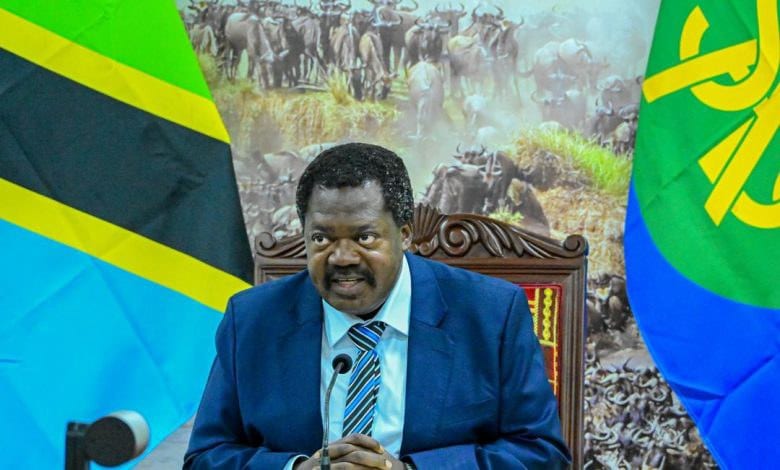
Tanzania’s Vice President Dr Emmanuel John Nchimbi has announced his resignation from office and retirement from public service and active politics, effective September 4, 2026, in a move that gives President Samia Suluhu Hassan the opportunity to appoint a new deputy.
Nchimbi disclosed his decision in an official public notice dated August 25, 2026, issued by the Office of the Vice President in Dodoma. He said he had formally submitted his resignation to President Hassan and was stepping aside in accordance with the Tanzanian Constitution.
The departure marks the end of a long political career for Nchimbi, a senior Chama Cha Mapinduzi (CCM) figure who has served in Parliament, Cabinet, and several senior government positions before becoming vice president.
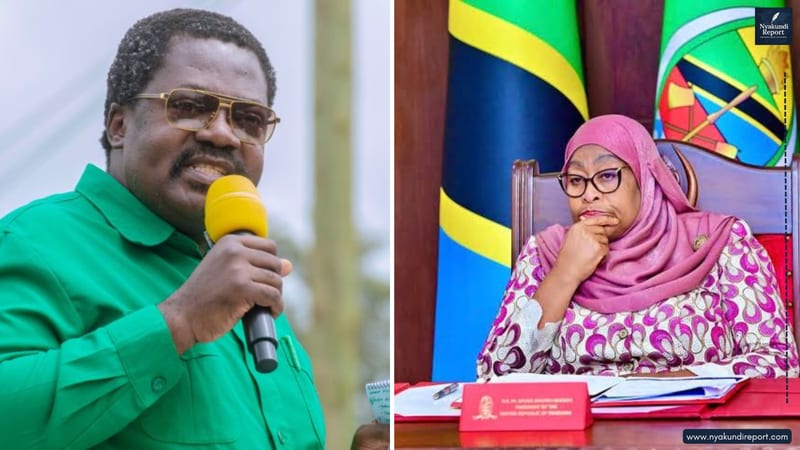
Nchimbi Says He Is Fulfilling His Promise to Samia 
Nchimbi based his resignation on Article 50(2)(c) read together with Article 149(2) of the Constitution of the United Republic of Tanzania, provisions that allow the Vice President to resign and pave the way for the President to appoint a successor.
In announcing his decision, Nchimbi said his departure was also connected to a commitment he made to President Hassan a year earlier.
He recalled that on August 27, 2025, he promised to support the President and the country faithfully and to leave office whenever Hassan determined that a change in the Vice Presidency was necessary.
Nchimbi said he was satisfied that the President now wanted a different Vice President and had therefore decided to honour the commitment he made.
His statement effectively places the decision within the President's political authority while presenting his departure as a voluntary fulfilment of a pledge rather than a public dispute with the administration.
Samia Now Has to Choose a New Vice President 
Nchimbi's resignation creates an opening for President Hassan to select a new holder of one of the country's most senior political offices.
The constitutional provisions cited by Nchimbi provide the legal framework for the transition, meaning the President can now proceed with the appointment of his successor.
The change comes at a significant point in Tanzania's political calendar and places renewed attention on the President's choice of a deputy who can support her administration and help advance the government's political agenda.
Nchimbi has not indicated that he intends to remain active within government after September 4, instead stating that he will retire completely from public service and active politics.
Nchimbi Ends a Long CCM Political Career 
Nchimbi's political career stretches back decades and has been closely linked to CCM, Tanzania's long-standing ruling party.
Born on December 24, 1971, in Mbeya Region, Nchimbi grew up in a family with a strong public-service background. His father, John Nchimbi, served as an Assistant Commissioner of Police and Regional Police Commander in Mtwara before becoming involved in CCM politics.
Nchimbi entered national political structures early in his career and was elected to the CCM National Executive Committee before becoming chairman of the party's youth wing, Umoja wa Vijana wa Chama cha Mapinduzi (UVCCM), in 1998.
His rise through the party helped establish the political network that would later propel him into Parliament and senior government positions.
From Public Service to Parliament 
Before becoming a full-time politician, Nchimbi worked at the National Environment Management Council (NEMC) between 1998 and 2003.
During the same period, he pursued higher education, earning a Master of Business Administration specialising in Banking and Finance from Mzumbe University.
He later served as District Commissioner for Bunda between 2003 and 2005 before completing a doctorate at Mzumbe University between 2008 and 2011.
His parliamentary career began in the 2005 General Election, when he won the Songea Town parliamentary seat on a CCM ticket.
Nchimbi secured 67.6 per cent of the vote against CHADEMA candidate Edson Mbogoro, who received 30.5 per cent.
His victory opened the door to a rapid rise through government, with President Jakaya Kikwete appointing him Deputy Minister for Information, Culture, and Sports in January 2006.
Nchimbi Rose Through Kikwete’s Government 
Nchimbi held several deputy ministerial positions during Kikwete's presidency. After serving in Information, Culture and Sports, he was moved to the Ministry of Labour, Employment, and Youth Development before later becoming Deputy Minister for Defence and National Service.
He successfully defended his Songea Town parliamentary seat in the 2010 General Election, defeating Mbogoro again with 59.9 per cent of the vote against his opponent's 37.48 percent.
His growing influence within CCM eventually earned him full cabinet positions. He served as Minister for Information, Culture and Sports before being appointed Minister for Home Affairs, a powerful position he held until December 2013.
His time in government established him as one of the more experienced political figures within Tanzania's ruling establishment.
Veteran Statesman Now Leaves Active Politics 
Nchimbi's resignation therefore represents more than a change in the Vice Presidency.
It marks the withdrawal of a veteran CCM politician who has spent much of his adult life in public service, moving from party youth leadership and local administration into Parliament, Cabinet and eventually the country's second-highest political office.
His decision to retire from active politics also means that he will no longer seek another government or party position after leaving the Vice Presidency.
Nchimbi thanked President Hassan and CCM for the confidence they placed in him throughout his political career and expressed gratitude to Tanzanians for supporting him during his years in public service.
He also sought to reassure the public that although he was leaving active politics, he would continue serving the country as a patriotic citizen.