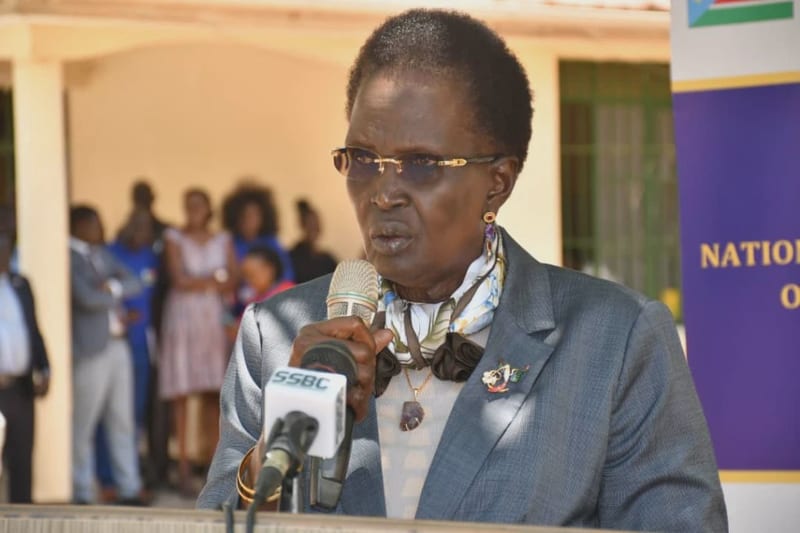
South Sudan Vice President Rebecca Nyandeng de Mabior has denied reports that security officers physically blocked her from travelling to Kenya, but her own office has confirmed that she could not make the trip because the required presidential authorisation was not granted in time.
The clarification has shifted the controversy from claims of an airport confrontation to a more politically significant question over why a senior member of President Salva Kiir’s government was unable to leave the country for an official engagement after her office had submitted a travel request nearly two weeks earlier.
Nyandeng was scheduled to travel to Kenya for official engagements, including a public lecture at Murang'a University of Technology on August 25, ahead of the institution's tenth graduation ceremony scheduled for August 28.
According to David Aleu Deng, acting executive director for Gender and Youth Affairs, Nyandeng's office submitted the required travel request to the Office of the President on August 13, but the necessary authorization was not granted early enough for her to leave on the scheduled date.
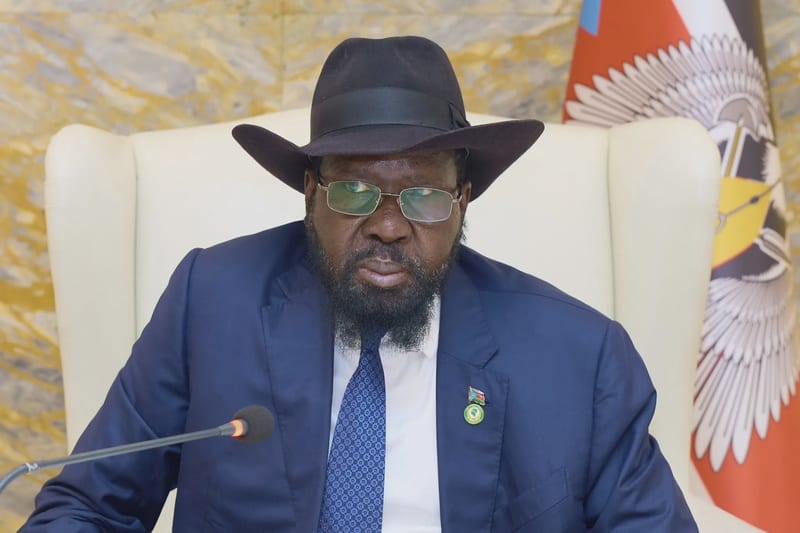
Kiir Government Clearance Kept Nyandeng in South Sudan 
Deng sought to dismiss social media reports claiming that Nyandeng had arrived at Juba International Airport only to be stopped by security personnel.
He explained that the vice president did not even proceed to the airport because the presidential clearance required for her international travel had not been obtained in time.
“As a senior government official, the Vice President cannot travel internationally without the necessary authorization and clearance from the Presidency,” Deng stated.
The explanation is important because it establishes that the decision-making authority ultimately rested with the presidency, meaning Nyandeng's inability to travel was directly linked to the failure to secure approval from President Kiir's office.
While there may not have been a dramatic airport confrontation, the practical outcome was the same: the vice president remained in South Sudan and missed an official engagement in Kenya because the government had not authorized her departure in time.
Why Was Her Travel Approval Delayed? 
The circumstances surrounding the delayed clearance have become particularly sensitive because Nyandeng's planned trip was an official engagement rather than a private journey.
Her office reportedly submitted the request on August 13, giving the presidency several days to process the authorization before her scheduled departure.
Yet the approval was apparently still unavailable when she was expected to travel.
Neither the explanation from her office nor the available information provides a detailed reason for the delay, leaving unanswered questions about whether the failure to approve the trip was administrative, political, or connected to wider disagreements within the government.
That uncertainty is likely to fuel speculation, especially because the vice president had recently made unusually critical remarks about the state of leadership and accountability under Kiir.
Nyandeng Had Just Questioned Who Advises Kiir 
The missed Kenya trip comes only days after Nyandeng publicly questioned the level of accountability surrounding President Kiir.
Speaking during the funeral of a veteran politician in Juba, she asked who was currently watching over the president, responding that nobody was doing so.
Her remarks appeared to contrast the current administration with the leadership structure associated with her late husband, Dr. John Garang, during the liberation struggle.
Nyandeng suggested that senior leaders previously played an important role in providing advice and checks within the leadership structure, raising questions about whether similar mechanisms remain effective under Kiir.
The remarks were politically sensitive because they came from someone serving within Kiir's own government and suggested dissatisfaction with the manner in which power and accountability are currently exercised.
President's Camp Pushes Back 
Kiir's side responded by defending his contribution to South Sudan's liberation struggle and rejecting attempts to portray the country's history as the achievement of one individual.
The President's camp also challenged those with political grievances to take their complaints to the electorate rather than using the struggles of liberation veterans as a political tool.
The response has further exposed the political tension surrounding the country's leadership as South Sudan approaches the December 2026 elections.
Against that background, the failure to approve Nyandeng's international travel is likely to attract greater scrutiny than it would have under ordinary circumstances.
A Senior Official Left Without Clearance 
The most politically revealing aspect of the episode is that Nyandeng's office says it followed the required procedure by submitting a travel request, yet presidential clearance did not arrive in time.
That means the issue was not simply whether the vice president wanted to travel or whether security officers had physically blocked her.
The decisive factor was whether the presidency authorized her to leave the country. By withholding or failing to provide that authorization before the scheduled departure, the Kiir administration effectively prevented the vice president from attending her planned engagements in Kenya.
That distinction matters because it points directly to the concentration of executive authority over senior officials' international movements.
Kenya Engagement Cancelled Amid Political Tensions 
Nyandeng's absence from the Murang'a University event therefore comes at a particularly sensitive moment for South Sudan's leadership.
Her office has strongly rejected the claim that she was dragged from an airport or physically prevented from boarding a plane, but it has simultaneously confirmed that she could not travel because the presidency had not granted the required clearance.
The two accounts are not necessarily contradictory.
She may not have been physically stopped at an airport, but the failure to authorize her departure meant she could not undertake the journey.
The development therefore raises a broader political question about the relationship between Nyandeng and the Kiir administration, particularly after her public criticism of the government's accountability structures.
With elections approaching and political tensions increasingly visible, the episode could become another point of friction within South Sudan's ruling establishment.
Nyandeng was not stopped at the airport, but Kiir's government effectively kept her in South Sudan by withholding the presidential clearance needed for her official Kenya trip.