
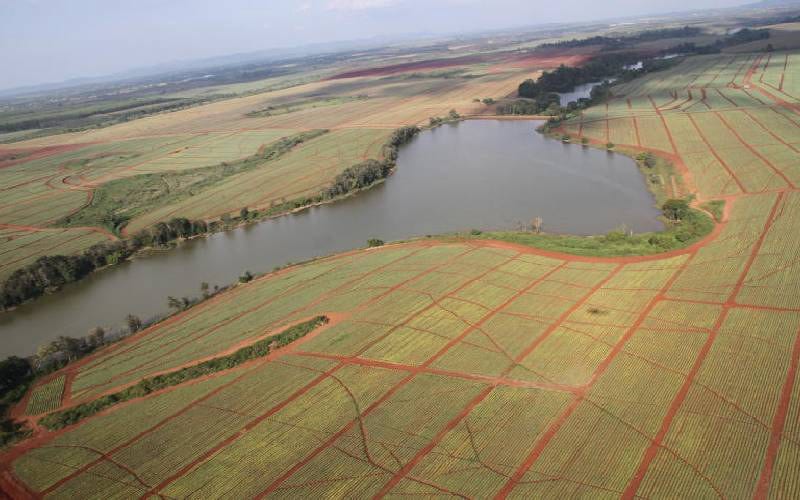
Del Monte Kenya is facing the compulsory acquisition of 21.7 hectares of its Murang’a land as the government moves to secure space for a wastewater treatment plant, opening a fresh chapter in the increasingly scrutinised relationship between the State and one of Kenya’s largest agricultural companies.
The National Land Commission (NLC) has identified the affected property as L.R. No. 12158/3, registered to Del Monte Kenya Limited.
According to a notice dated August 21, 2026, the land is required by the Kenya Athi Water Works Development Agency for construction of a wastewater treatment plant.
The proposed acquisition will now come under public scrutiny, with the NLC scheduling a public inquiry for September 16, 2026, at Methi Chief’s Camp in Murang’a County.
For Del Monte, the process could mean surrendering a substantial parcel of its land to the State.
For the government, the acquisition is being presented as a public-interest project.
But the financial and legal questions surrounding compensation could determine whether the process moves smoothly or becomes another prolonged land dispute.
Government Moves Against Del Monte Land 
The NLC's intervention gives the State the legal mechanism to acquire the 21.7 hectares even though the property is privately owned.
Kenya's Constitution permits compulsory acquisition where privately held land is required for a public purpose or in the public interest.
However, the power comes with an important condition.
The owner must receive prompt and just compensation.
That means the government cannot simply take possession and leave the landowner to absorb the financial loss.
The NLC must follow the procedures provided under the Land Act, including issuing notices, identifying the affected property and conducting an inquiry before completing the acquisition.
The September hearing will therefore be a critical stage in determining how much Del Monte and any other legitimate claimants may be entitled to receive.
Ksh Billions Could Be at Stake in Compensation 
The size of the affected parcel makes valuation a potentially significant issue.
The compensation process may take into account the value of the land as well as qualifying developments and improvements located on the property.
Depending on the circumstances, this could include structures, crops, trees and other investments affected by the acquisition.
The NLC has invited people seeking compensation to submit claims accompanied by identification documents, KRA PIN details, land ownership records and bank information.
That requirement places the burden on claimants to establish their interests before compensation can be processed.
For Del Monte, the crucial question will be whether the valuation adequately reflects the commercial value of the land and any investments affected by the project.
The company and other interested parties also retain the right to challenge the acquisition or dispute compensation through the available legal channels.
Why the Del Monte Acquisition Matters 
The proposed takeover comes at a sensitive time for Del Monte's operations in Murang’a.
The company has faced increasing legal and regulatory scrutiny, including disputes that have generated significant financial exposure.
In July 2026, the Environment and Land Court in Murang’a dismissed Del Monte's attempt to stop proceedings involving a Ksh975 million legal costs bill arising from earlier litigation.
The company has also been involved in a separate Ksh1.76 billion tax dispute concerning transfer-pricing issues.
Those matters, however, should not be confused with the latest land acquisition.
The NLC notice does not describe the 21.7-hectare acquisition as a penalty or enforcement measure against Del Monte.
Instead, the government has identified the construction of a wastewater treatment plant as the public purpose behind the acquisition.
That distinction could become important as the process unfolds.
Public Inquiry Will Put Government Under Scrutiny 
The September 16 inquiry will provide Del Monte and other interested parties with an opportunity to present their positions.
The NLC will have to consider claims relating to ownership, valuation, compensation and other concerns before the acquisition progresses.
For the government, the inquiry will also test whether the project has been sufficiently justified and whether the compensation process is transparent.
Compulsory acquisition is one of the State's most powerful tools over private property.
Used properly, it allows governments to secure land for infrastructure projects that serve broad public interests.
Used carelessly, it can trigger expensive litigation, delays and accusations of unfair treatment.
That makes transparency critical.
Wastewater Project Puts Public Interest at Centre 
The government says the land is required for a wastewater treatment plant, placing the acquisition within a broader infrastructure and environmental context.
Wastewater treatment facilities can play an important role in protecting water resources, improving sanitation and supporting growing populations and industries.
But the public-interest argument does not eliminate the rights of the landowner.
The State must still demonstrate that the acquisition follows the law and that affected owners receive fair compensation.
For Del Monte, the issue is therefore not simply about losing 21.7 hectares.
It is about determining the financial value of the property, the impact on its operations and whether the acquisition process adequately protects its legal interests.
Del Monte Faces Another High-Stakes Test 
The NLC's move adds another layer to the regulatory and legal challenges surrounding Del Monte's operations in Kenya.
While the government has framed the acquisition around a wastewater treatment project, the company will now have to defend its property interests through a formal process that could ultimately determine the future of the affected land.
The September inquiry is likely to attract close attention because the dispute brings together three powerful interests—private property rights, public infrastructure and government authority.
The outcome could also establish an important precedent for how major private landowners are treated when the State requires land for public infrastructure.
For now, the government has the legal machinery to pursue the acquisition.
Del Monte has the right to contest the process and compensation.
The real battle may not be over whether the State can acquire the land, but over how much it must pay, whether the process is transparent and whether public interest is being pursued without trampling private property rights.