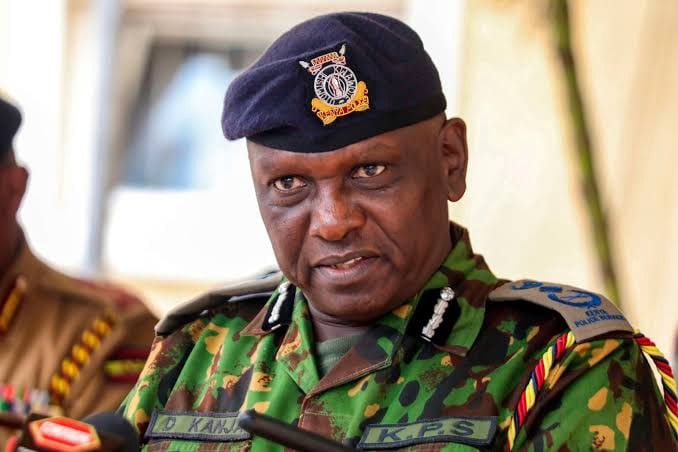
Inspector-General Douglas Kanja has secured sweeping new powers to reorganise Kenya's police service after gazetting far-reaching amendments to the National Police Service Standing Orders.
The reforms fundamentally reshape the command structure of the Kenya Police Service (KPS), Administration Police Service (APS) and the Directorate of Criminal Investigations (DCI), giving the Inspector-General greater authority over how police formations are created, merged, and managed.
The changes also strengthen central control over police operations, investigative commands, and specialised units as the government pushes to improve coordination, accountability and operational efficiency within the National Police Service.
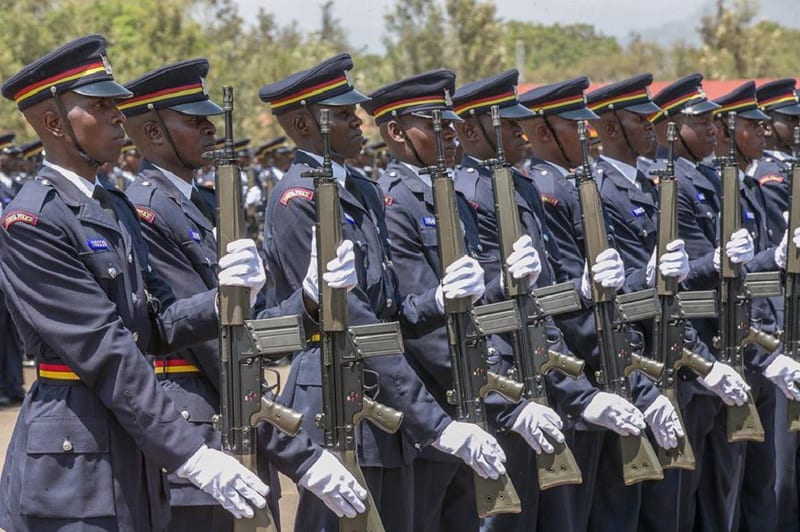
Police restructuring gives IG greater control over DCI and specialised units 
The changes, published in a special issue of the Kenya Gazette on July 30, repeal Chapter Seven of the existing National Police Service Standing Orders and replace it with a comprehensive framework governing the organisation and management of police formations.
Under the revised rules, the Inspector-General can establish, merge, reorganise or abolish police formations, units, and specialised components through written approval.
The amendments also require the Inspector-General to issue binding written directions whenever disputes arise over the roles or jurisdiction of different police formations, investigative commands or specialised units.
The reforms significantly centralise operational decision-making within the office of the Inspector-General, giving Douglas Kanja greater oversight over how police resources and command structures are deployed nationwide.
In addition, all operational guidelines, standard operating procedures, and internal directives affecting police formations must now receive the Inspector-General's approval before implementation.
The government says the changes are designed to eliminate duplication of functions, improve coordination, and strengthen command within the National Police Service.
Kenya Police, APS, and DCI undergo major restructuring 
The revised Standing Orders reorganise all three branches of the National Police Service under clearly defined operational structures.
The Kenya Police Service, under Deputy Inspector-General Eliud Lagat, will now comprise specialised formations including the General Service Unit (GSU), Kenya Police Traffic Unit, Presidential Escort Unit (PEU), Kenya Airports Police Unit (KAPU), Kenya Railways and Ports Police Unit, K9 Police Unit, Nairobi Metropolitan Police, Diplomatic Police Unit, Tourist Police Unit, Marine Police Unit, Quick Response Unit and the Government Vehicle Check Unit.
The Administration Police Service, led by Deputy Inspector-General Gilbert Masengeli, will continue operating through specialised units such as the Border Police Unit (BPU), Anti-Stock Theft Police Unit (ASTU), Critical Infrastructure Police Unit (CIPU), Judiciary Police Unit, Energy Police Unit, Mining Police Unit, Water Police Unit and the National Government Administration Police Unit.
The Directorate of Criminal Investigations has also undergone significant restructuring.
The DCI will now operate through specialised investigative formations, including the Counter-Terrorism Bureau, National Anti-Narcotics Investigations Bureau, Crime Research and Intelligence Bureau, National Police Service Forensic Laboratory, Kenya Airports Criminal Investigations and Kenya Railways and Ports Criminal Investigations.
DCI receives wider deployment powers under new framework 
Beyond the structural changes, the new Standing Orders grant the Directorate of Criminal Investigations broader administrative authority over its operations.
The DCI can now, in consultation with the Inspector-General, establish command structures, determine deployments and reorganise investigative formations, specialised units, sub-units, sections and operational desks.
The amendments also bring police training institutions under a unified National Police Service training framework aimed at standardising operational procedures across all formations.
Government officials believe the reforms will strengthen command, reduce overlaps between police agencies and improve coordination during investigations and security operations.
The changes come at a time when security agencies continue to face growing pressure to modernise policing, improve intelligence-sharing and respond more effectively to increasingly complex security threats.
The latest overhaul represents one of the most significant reorganisations of the National Police Service in recent years, consolidating greater authority within the office of the Inspector-General while redefining how Kenya's police service is structured and managed.