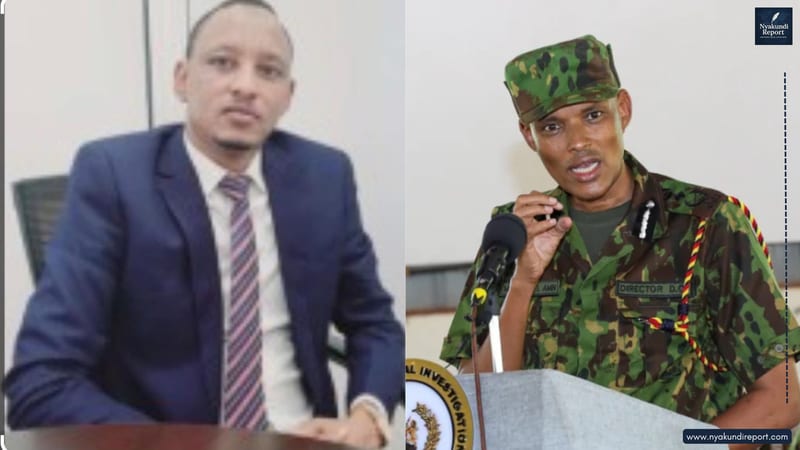
A Nairobi-based advocate has been arrested over an alleged land fraud scheme after detectives accused him of using forged court documents in an attempt to wrestle ownership of private property from its lawful owner, highlighting growing concerns over the role of legal professionals in Kenya's thriving land fraud networks.
The Directorate of Criminal Investigations (DCI) confirmed that detectives from its specialised Land Fraud Investigations Unit (LFIU) arrested Abdulahi Musdaf Hussein following investigations into what authorities describe as a calculated attempt to deprive a woman of land she had legally purchased.
The arrest shines a spotlight on the increasingly sophisticated methods employed by land fraud syndicates, where forged legal documents and court processes are allegedly used to legitimise fraudulent ownership claims.
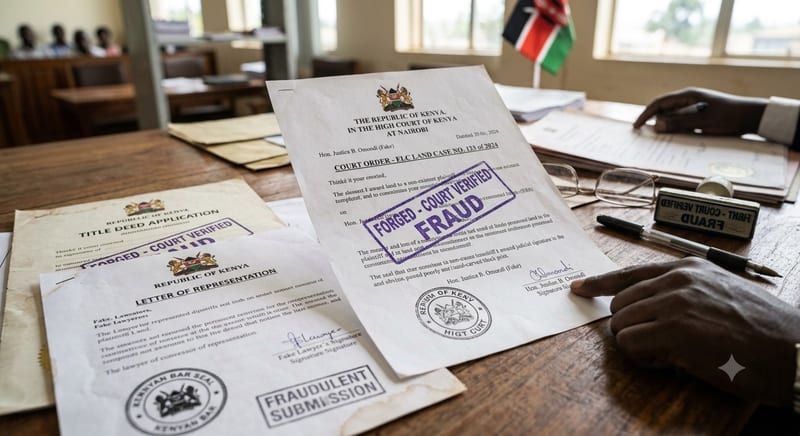
Woman Shocked by Court Case Over Land She Already Owned 
According to investigators, the complainant had lawfully purchased the parcel of land in 2025 and had enjoyed uninterrupted possession of the property without any disputes.
However, her ownership was unexpectedly thrown into question after she was served with court documents indicating that Hussein was laying claim to the same parcel.
The court filings allegedly presented Hussein as the rightful owner, forcing the woman into a legal battle over property she believed had been legitimately acquired.
The emergence of the case prompted the complainant to seek the intervention of the DCI's Land Fraud Investigations Unit, which specialises in complex land-related crimes involving forged titles, fake succession documents and fraudulent transfers.
Detectives launched a comprehensive investigation to establish how the ownership dispute had arisen and whether criminal offences had been committed.
DCI Investigations Lead to Criminal Charges 
Following months of investigations, detectives compiled their findings and forwarded the case file to the Office of the Director of Public Prosecutions (ODPP) for legal review.
After examining the evidence, prosecutors agreed with investigators that there was sufficient basis to institute criminal proceedings.
The ODPP approved charges against Hussein for allegedly making a false document and uttering a forged document, offences that carry serious penalties under Kenyan law.
Armed with the approval, detectives tracked the advocate to Nairobi's Central Business District, where he was arrested during an operation conducted by officers from the Land Fraud Investigations Unit.
The suspect has since been placed in custody and is undergoing processing ahead of his arraignment in court.
Land Fraud Continues to Plague Kenya's Property Market 
The arrest comes as authorities intensify efforts to dismantle criminal networks behind fraudulent land transactions, an area that has remained one of Kenya's most persistent forms of economic crime.
Investigators say modern land fraud schemes have become increasingly elaborate, with fraudsters allegedly exploiting forged documents, fake succession proceedings, fabricated court orders and manipulated ownership records to target valuable properties.
In some cases, unsuspecting landowners only discover the fraud after receiving court summons, eviction notices or learning that their land has been transferred without their knowledge.
The involvement of professionals, including advocates, surveyors, land brokers and public officials, has previously emerged as a recurring concern in investigations into high-value land disputes.
Authorities maintain that while the overwhelming majority of advocates uphold professional standards, any legal practitioner found using their expertise to facilitate fraudulent transactions will face the full force of the law.
The DCI has continued to urge landowners to conduct regular official searches, safeguard ownership documents and promptly report suspicious claims involving their properties.
The latest arrest is expected to reinforce ongoing efforts by investigators and prosecutors to crack down on land cartels accused of exploiting weaknesses in property registration systems and judicial processes to unlawfully seize privately owned land across the country.