






























The Kenyan government has officially moved to stem the tide of staggering economic losses in the livestock sector by announcing the establishment of national animal feed reserves.
Agriculture and Livestock Development Cabinet Secretary Mutahi Kagwe revealed that these strategic reserves are designed to cushion pastoralist communities.
And dairy farmers against drought-related shocks that have historically caused losses exceeding KSh 50 billion.
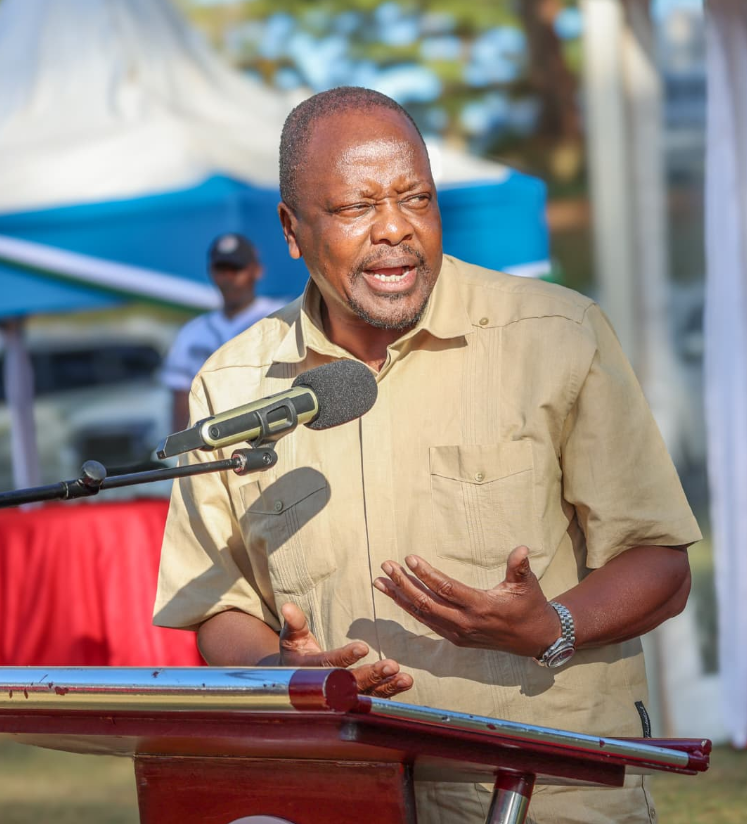
Speaking during the launch of the Emkitha Dairy Cooperative Union in Embu County on January 15, 2026, the CS emphasized that drought should no longer be handled as an emergency.
But as a predictable recurring reality that demands proactive planning.
By stockpiling silage, hay, and other drought-tolerant fodder during periods of surplus, the state aims to prevent a repeat of past catastrophes where over 2.5 million animals perished due to lack of feed and water.
Under this new policy framework, county governments will take the lead in planning, stocking, and distributing the feed.
While the national government provides the necessary coordination, technical guidance, and funding.
Livestock cooperatives will serve as the primary delivery agents, ensuring that the reserves reach the actual farmers and pastoralists on the ground rather than being siphoned off by intermediaries.
This localized approach is intended to stabilize milk production and protect the assets of vulnerable communities in Arid and Semi-Arid Lands (ASAL).
To complement the feed reserves, the ministry is also intensifying disease control measures, including stricter livestock movement controls.
In addition to expanded vaccination campaigns for foot and mouth disease and anthrax.
Furthermore, the government is focusing on productivity rather than just herd size, with CS Kagwe urging farmers to leverage improved nutrition to double their milk yields.
In Embu alone, where average production stands at eight liters per cow, better husbandry practices through the Emkitha Union are expected to significantly raise daily outputs.
The initiative also integrates early warning systems that will trigger the timely release of feed before livestock condition deteriorates, thereby preventing distress sales at throwaway prices.
By shifting from reactive responses to a structured system of preparedness, the government hopes to transform the livestock sector into a resilient pillar of the national economy and safeguard the livelihoods of millions of Kenyans.
ALSO READ: South Korea Court Jails Ex-President Yoon Suk Yeol for 5 Years Over Obstruction of Justice


